Stand Up Food Pouches Design Ideas That Sell More Food
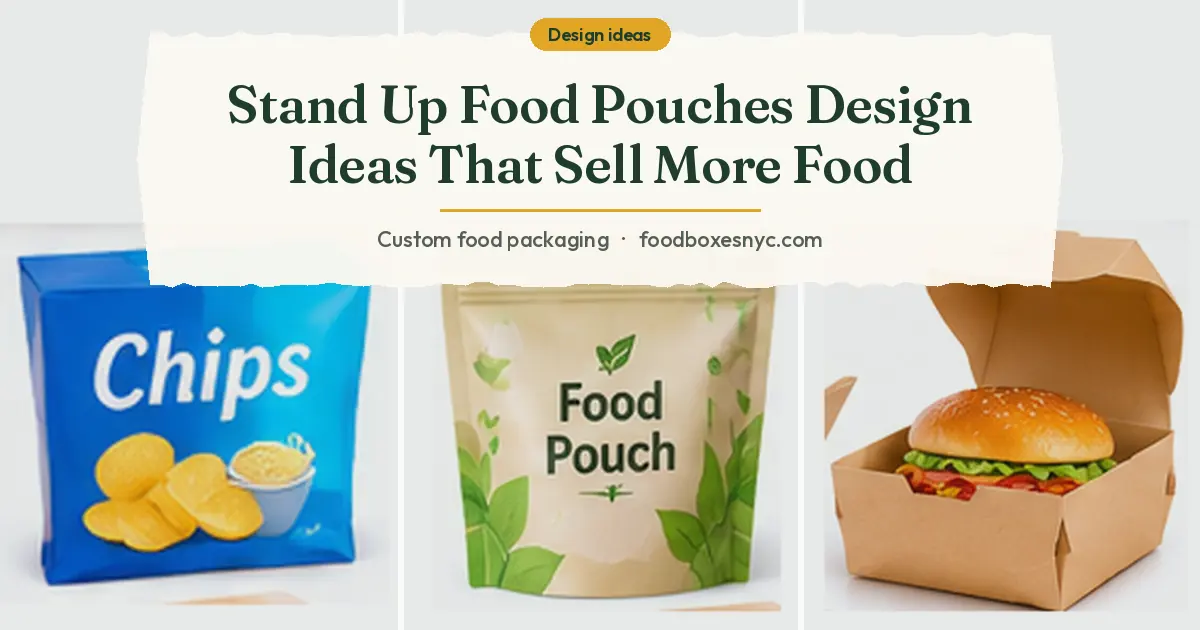
Table of contents
- What great design does for dry foods and snacks
- 10 design ideas for stand up food pouches
- Putting it together: an example
- Choosing colors and typography
- Printing methods and finishes
- Labels and information to include
- Sustainability messaging that works
- Designing for different channels
- Building a packaging design brief
- Budget-friendly design upgrades
- Testing your design
- From idea to proof
- Design mistakes to avoid
- In summary
Great stand up food pouches designs do more than hold dry foods and snacks. They make the food look more appetizing, help customers remember your name, and turn every order into marketing. This guide shares practical design ideas for custom stand up food pouches, from color and typography to finishes, labels and sustainability.
Whether you're launching a new restaurant or refreshing packaging for an established brand, these ideas will help you brief a designer or work directly with our team.
What great design does for dry foods and snacks
People eat with their eyes first. Packaging is often the first thing customers see, whether it's on a counter, in a delivery bag or on a social media feed. Good design makes dry foods and snacks look fresh and appealing, sets expectations for quality and price, and helps customers find you again.
Design also has a practical side. Clear labels reduce mistakes on busy lines, color coding helps staff pack orders faster, and smart structure, such as resealable zippers or tear notches, keeps food looking its best on arrival.
10 design ideas for stand up food pouches
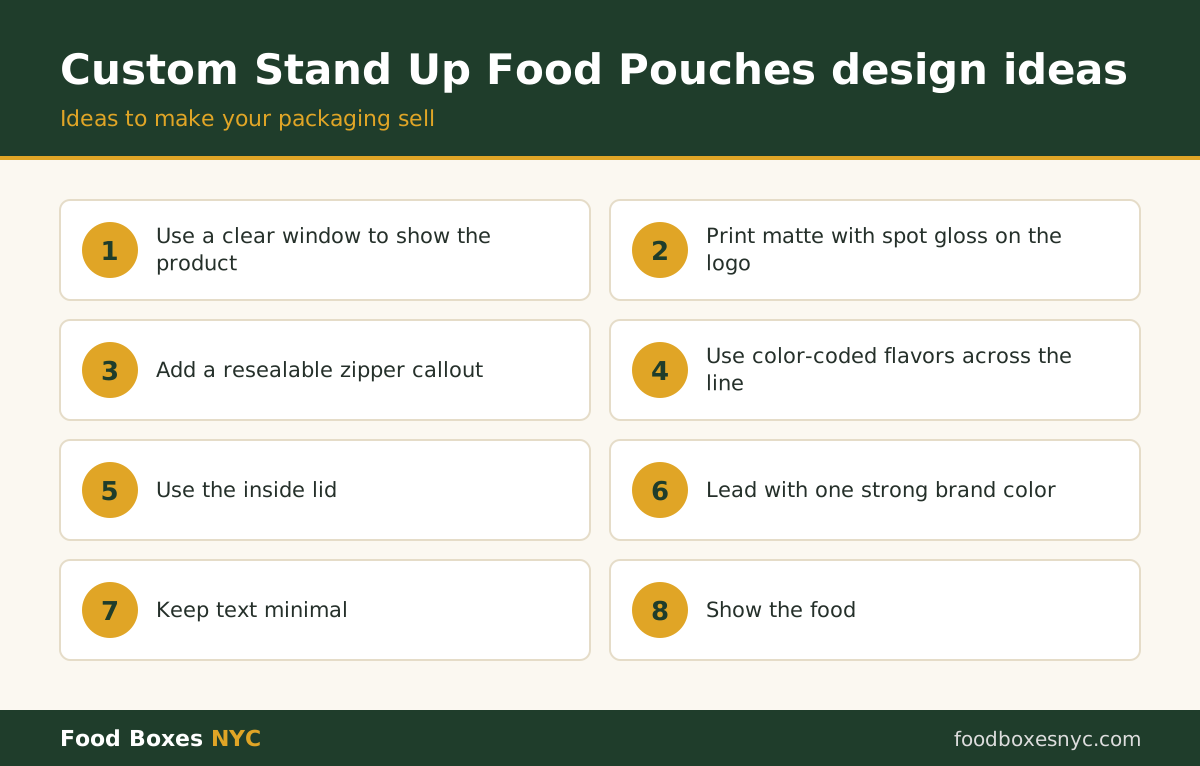
1. Use a clear window to show the product
For dry foods and snacks, this detail helps the packaging match the quality of the food inside. Ask us for a mockup to see how it looks on your dieline.
2. Print matte with spot gloss on the logo
For dry foods and snacks, this detail helps the packaging match the quality of the food inside. It pairs well with the other ideas on this list.
3. Add a resealable zipper callout
For dry foods and snacks, this detail helps the packaging match the quality of the food inside. We can show this on your digital proof before you commit.
4. Use color-coded flavors across the line
For dry foods and snacks, this detail helps the packaging match the quality of the food inside. We can show this on your digital proof before you commit.
5. Use the inside lid
A short thank-you note, a pun or a QR code inside the lid is a surprise customers remember and share.
6. Lead with one strong brand color
A single bold color across every box makes your brand recognizable from across the street and in delivery photos.
7. Keep text minimal
Your name, one line about the product and essential info are enough. Busy designs look cheap and are hard to read. We can show this on your digital proof before you commit.
8. Show the food
A window, illustration or photo helps customers know what's inside and makes the product more appetizing. It pairs well with the other ideas on this list.
9. Plan for seasonal sleeves
A printed sleeve or sticker lets you celebrate holidays without reprinting your core boxes.
10. Make the logo visible from the top
Most customers see the lid first, especially in delivery bags, so place your logo where it reads from above.
Putting it together: an example
Imagine a neighborhood brand launching new stand up food pouches. They choose kraft board with one bold brand color, place the logo large on the top panel so it shows in delivery photos, and print a short line about their ingredients on the side. Inside the lid, a QR code links to their loyalty program.
For the holiday season, they add a printed sleeve instead of reprinting the box. The result is packaging that looks consistent across every order, costs less than full-color printing, and gives customers a reason to come back. The same approach works for most dry foods and snacks, whatever your budget.
Choosing colors and typography
Warm colors such as red, orange and yellow are associated with appetite and energy, which is why they're popular for fast food. Greens and kraft browns suggest fresh, natural and healthy. Black, deep navy and metallic accents signal premium and indulgent.
For type, pick one display face for your name and one clean, readable face for everything else. Keep important text large enough to read at arm's length, and make sure it contrasts strongly with the background.
Printing methods and finishes
Full-color CMYK printing handles photographs and gradients. Pantone spot colors keep your logo consistent across every box and paper. One- or two-color printing on kraft is cost-effective and looks great for street food and bakeries.
Finishes add personality: matte aqueous coating gives a modern, low-glare look; gloss makes colors pop; grease-resistant coatings protect the print on oily foods; foil stamping and embossing lift premium lines. On stand up food pouches, we usually keep heavy finishes to the outside and use food-safe inks wherever food may touch the surface.
Labels and information to include
Restaurant to-go packaging usually needs only your brand, contact details and any reheating or safety notes. Retail food packaging is different: in the US, packaged foods sold in stores generally need a product name, net quantity, ingredient list, allergen information and manufacturer details, and often a Nutrition Facts panel.
Requirements vary by product and market, so check current FDA guidance or speak with a food-labeling specialist before printing. We'll leave space on the dieline for any panels you need, and we can print barcodes and lot codes.
Sustainability messaging that works
If you use kraft, recycled board or compostable materials, say so clearly and simply. A short line such as 'Please recycle' or 'Compost where facilities exist' helps customers do the right thing.
Design can support sustainability too: lower ink coverage, uncoated kraft surfaces and right-sized boxes all reduce material and waste.
Designing for different channels
Where customers meet your stand up food pouches shapes the design. On a counter, the front panel and lid do the selling. In delivery bags, the top of the box and any seals matter most. On retail shelves, the front must communicate the product and flavor in a few seconds. On social media, a strong pattern or color makes posts instantly recognizable.
If your food sells in more than one channel, design for the toughest one first, usually retail or delivery, then simplify for counter service.
Building a packaging design brief
A clear brief saves time and revisions. Include:
- Your logo files, brand colors (Pantone if you have them) and fonts.
- The product name, flavors or variants and how many designs you need.
- Any text that must appear, such as ingredients, allergens or reheating instructions.
- Examples of packaging you like and dislike.
- Your budget, quantity and target delivery date.
Budget-friendly design upgrades
You don't need a big budget to make stand up food pouches stand out. A single bold Pantone color on kraft costs less than full color and looks intentional. A custom sticker or belly band can brand plain boxes for limited runs. Printing only the outside keeps costs down, and one premium finish, such as foil on the logo, delivers more impact than several small effects.
Standardizing on one design across sizes also helps, because you can order larger quantities and switch flavors with stickers or stamps.
Testing your design
Before a full run, review a digital proof at actual size, print a quick paper mockup and wrap it around a real portion of dry foods and snacks. Check that the logo isn't hidden by folds or handles, text is readable at arm's length, and colors look right next to the food.
Ask a few regular customers or staff what they notice first. If the answer isn't your brand name or product, simplify the design.
From idea to proof
Send us your logo, brand colors and a few examples of packaging you like. We'll place your artwork on the correct dieline, suggest finishes and send a free digital proof. Once you approve it, production takes 8 to 12 business days.
If you don't have a designer, our team can help you turn a simple brief into print-ready artwork for your boxes, papers and bags.
Design mistakes to avoid
- Placing key text on folds, glue flaps or areas hidden by handles.
- Using low-resolution images that print blurry.
- Choosing light colors on surfaces that will show grease.
- Cramming every message onto one panel.
- Forgetting to check colors on a printed proof for brand-critical shades.
In summary
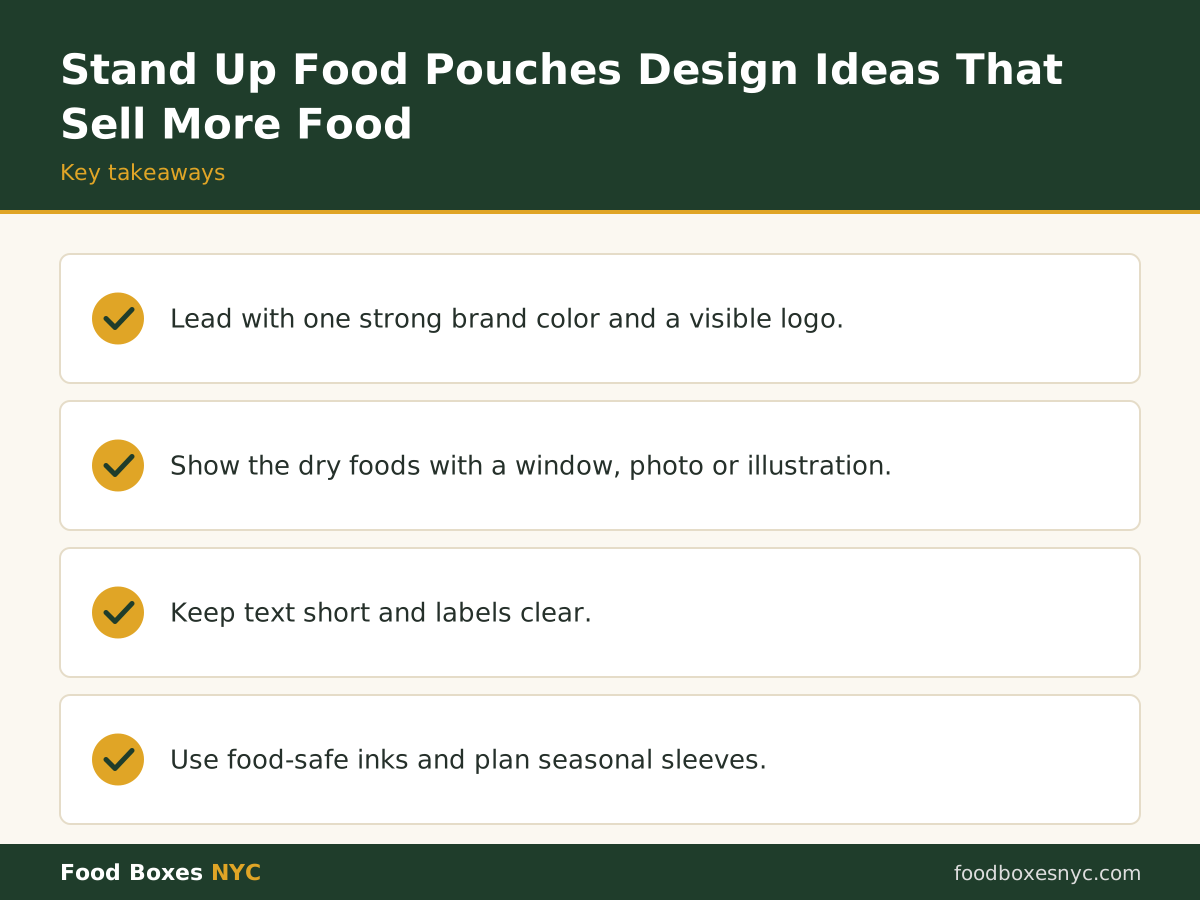
The best stand up food pouches designs are simple, consistent and made for how your food is actually served. Pick a strong color, make your logo easy to see, use one or two thoughtful details, and keep labels clear.
Ready to bring your design to life? Get a free quote and a digital proof from our team.
Order custom stand up food pouches
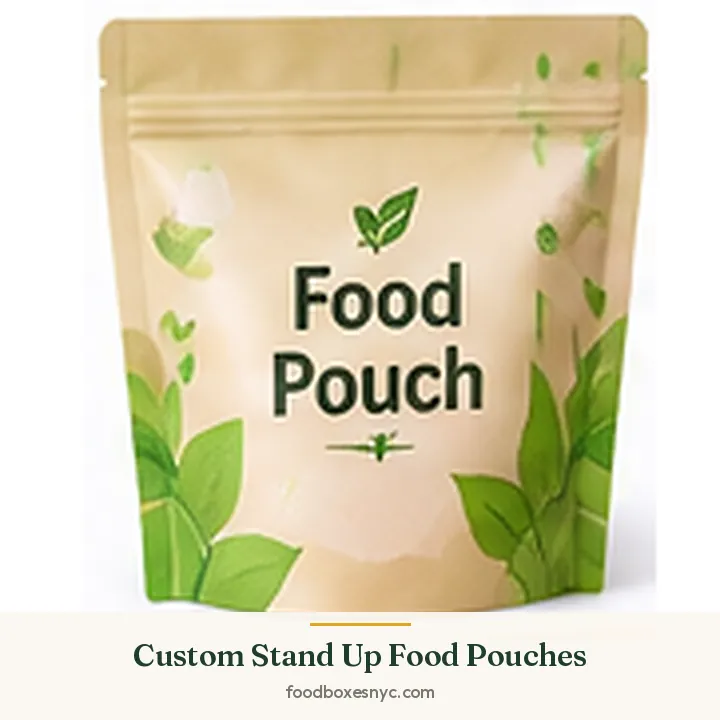
Custom Stand Up Food Pouches for dry foods and snacks, printed with your logo and built with resealable zippers and tear notches. Low 100-unit.
View product & get a quoteFrequently asked questions
Q: Can I print full color on stand up food pouches?
A: Yes. We print CMYK full color, Pantone spot colors and one- or two-color designs.
Q: Are the inks safe for dry foods and snacks?
A: We offer food-safe inks and coatings. Tell us which surfaces touch the food and we'll recommend a suitable build.
Q: Do you help with design?
A: Yes. Every order includes free artwork checks and a digital proof, and we can help turn a simple brief into artwork.
Q: How much do custom stand up food pouches cost?
A: Price depends on size, quantity, material, printing and finishes. Larger runs lower the unit price, and simple one- or two-color printing on kraft is often the most economical. Send your specs through the quote form and we'll reply with tiered pricing within one business day.

Food Boxes NYC team
Our packaging specialists help restaurants, bakeries, food trucks and food brands choose sizes, materials, coatings and designs. Every guide draws on the questions customers ask us while planning real orders.